

The temperature control system of electrically heated stainless steel and carbon steel equipment is a complex system with multiple components working collaboratively. Its core components include temperature sensors, controllers, actuators, human-machine interfaces, and auxiliary circuits. The temperature sensor is the system's sensing unit, responsible for real-time monitoring of temperature changes within the equipment and converting the physical quantity into an electrical signal, which is then transmitted to the controller. Commonly used temperature sensors include thermocouples, resistance temperature detectors (RTDs), and infrared thermometers. Thermocouples are suitable for high-temperature environments, RTDs offer high accuracy, and infrared thermometers are suitable for non-contact measurement. The selection and installation location of the sensor must be determined based on the temperature range, response speed, and measurement accuracy requirements. It is generally necessary to avoid direct radiation from the heating element or dead zones in the medium flow to ensure representative measurement. The controller is the brain of the temperature control system, responsible for processing sensor signals, running control algorithms, and outputting adjustment commands. Common controller types include PLCs, PID controllers, and intelligent temperature controllers. PID controllers achieve precise temperature regulation through proportional, integral, and derivative operations, while intelligent temperature controllers have self-tuning and adaptive functions, capable of optimizing control parameters based on the system's dynamic characteristics.
The actuator is the action unit of the control system, adjusting the heating power according to the controller's commands to achieve direct temperature control. Common actuators used in electric heating equipment include solid-state relays, thyristor power regulators, and contactors. Solid-state relays control the on/off time of the heating element through pulse width modulation, while thyristor power regulators achieve stepless power regulation through phase control. The selection of actuators must consider load power, switching frequency, and heat dissipation requirements. High-power equipment typically uses thyristors or contactors, while low-power equipment is better suited to solid-state relays. The human-machine interface (HMI) is the interaction window between the system and the operator, providing functions such as parameter setting, status display, and alarm management. Modern temperature control systems often use touchscreens or industrial computers for their HMIs, supporting graphical operation and data logging for easy process adjustment and fault diagnosis. Auxiliary circuits include power modules, signal isolators, and protection circuits, providing stable operating voltage and electrical isolation to prevent interference or overload damage to the equipment.
The software portion of the temperature control system includes control algorithms, communication protocols, and data management modules. Control algorithms such as PID, fuzzy logic, or neural networks determine the system's regulation quality. Communication protocols such as Modbus or PROFIBUS enable interconnection between the controller and a host computer or other devices. The data management module is responsible for storing and analyzing historical data. System calibration and maintenance are also crucial for ensuring long-term stable operation. Regularly calibrating sensors, checking the contact status of actuators, and cleaning heat dissipation components can effectively prevent drift or failure. In summary, the temperature control system of electrically heated stainless steel and carbon steel equipment achieves precise temperature monitoring and regulation through the coordinated work of sensors, controllers, actuators, and auxiliary components, ensuring the stability and safety of the process.
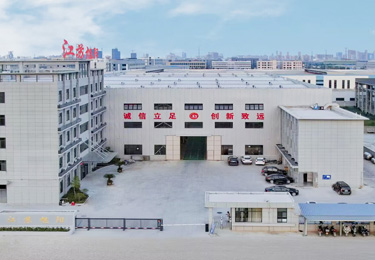
The company is located in the south park of Jingjiang Economic and Technological Development Zone, with superior geographical location and convenient transportation.


Contact:Sang Yuanliang
Tel:13338894168